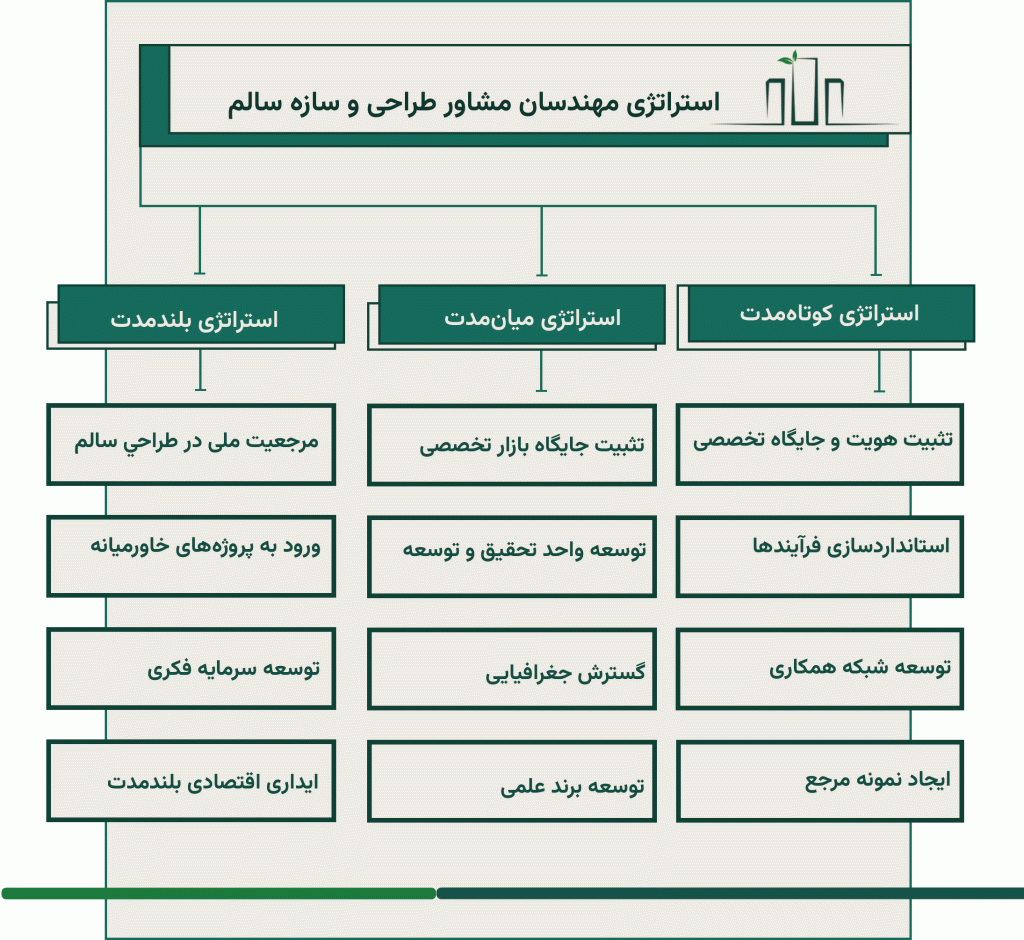

Strategy
A: Short-term strategy (1 to 2 years)
1. Establishing identity and specialized position
• Developing an operational manifesto for “health-oriented architecture” and transforming it into the company’s interior design guidelines.
• Focusing on one or two key project types (health-oriented residential complexes, human-oriented living spaces).
• Redesigning the visual identity, website, and portfolio with an emphasis on conceptual differentiation.
2. Standardizing processes
• Establishing a BIM-based design process
• Creating and documenting dimensions, components, and indicators of health and sustainability in design to improve the mental health of the community.
• Developing an economic evaluation model for projects (construction cost, maintenance, return on investment).
3. Developing a collaboration network
• Establishing formal cooperation with the Society of Consulting Engineers and the Association of Consulting Architects and Urban Planners.
• Active communication with universities and publishing at least 2 articles or specialized lectures in the field of health-oriented architecture.
4. Create a reference model
• Implement at least one pilot project in which all health-oriented and sustainability principles are implemented in a documented manner.
• Professionally document the project for branding and marketing use.
B: Medium-term strategy (3 to 5 years)
1. Establishing a specialized market position
• Becoming the first choice of employers in “health-oriented housing” projects in the target market.
• Entering urban and semi-public projects (schools, cultural centers, social spaces).
2. Developing a research and development (R&D) unit
• Establishing a research department in the field of health-oriented and sustainable architecture.
• Establishing a research department in the field of healthy housing architecture and women’s mental health.
• Developing a company-specific methodology for measuring the “spatial quality of life index”.
• Practical use of artificial intelligence and data analysis in design optimization.
3. Geographic expansion
• Cooperation with large urban developers.
• Establishing an office or representative office in another key city.
4. Developing a scientific brand
• Publishing a book or specialized guide on healthy housing.
• Holding specialized workshops and training courses.
• Obtaining international sustainability certificates (if economically justified).
C: Long-term strategy (5 to 10 years)
1. National authority in health-oriented architecture
• Transforming the company's brand into a specialized reference in human-oriented architecture in Iran.
• Defining a standard or native model of Iranian healthy architecture.
2. Entering into Middle Eastern projects
• Designing landmark urban projects (health-oriented towns, extensive residential complexes, large medical or educational centers).
• Participating in formulating metropolitan policies related to the quality of the living environment.
3. Developing intellectual capital
• Establishing an architecture and health studies center.
• Training a new generation of designers within the framework of the company's philosophy.
• Creating a data bank of the performance of implemented projects and analyzing their impact on users' satisfaction and quality of life.
4. Long-term economic sustainability
• Creating a hybrid revenue model (design, specialized environmental health consulting, training, content publishing).
• Entering into Design-Build development partnerships or joint ventures.